
Electrical Circuits I
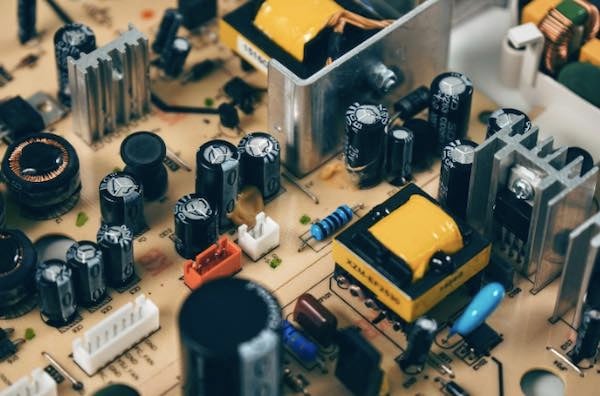
Electrical Circuits I is one of the fundamental courses in electrical engineering that introduces students to the essential concepts of circuit analysis. In this course, students learn the basic laws of electric circuits such as Kirchhoff’s laws, voltage–current relationships in basic elements, resistive circuits, and various network analysis techniques including node analysis, mesh analysis, superposition, and Thevenin/Norton equivalent circuits.
Transient response of RL and RC circuits and their time-domain behavior are also studied. The main goal of this course is to develop a deep understanding of circuit behavior and to build the ability to model and analyze electrical systems ranging from simple to moderately complex. Mastering these topics provides a solid foundation for more advanced courses such as Electrical Circuits II, Electronics, Electric Machines, and Energy Systems.
Linear Control Systems Lab
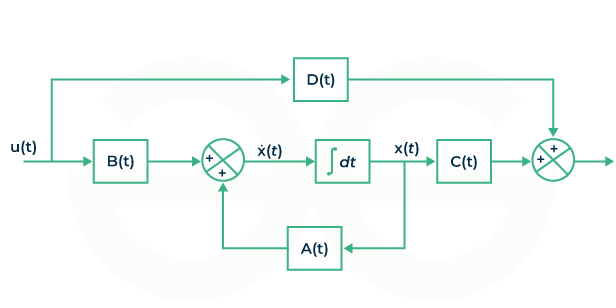
The Linear Control Systems Laboratory is designed to give students hands-on experience with fundamental control concepts. In this course, students first learn how to design and tune PID, PI, and PD controllers, and then implement them on real physical systems. These systems may include educational setups such as the Ball and Beam system, the behavior of DC motors, and other dynamic control equipment.
The primary objective of the course is to help students gain practical insight into system dynamics by observing real-world responses to different control strategies, analyzing stability and transient behavior, and understanding how controller parameters influence system performance. This laboratory bridges the gap between theoretical control concepts and their practical applications.